Nov 26, 2026 | News
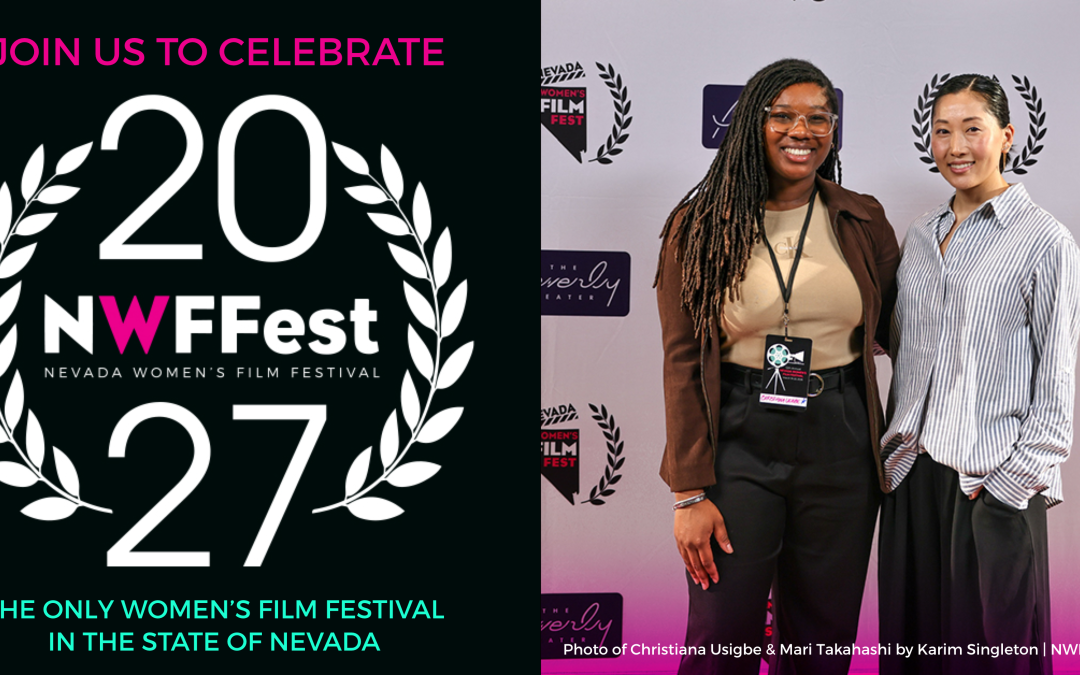
The 13th annual Nevada Women’s Film Festival (NWFFest)
returns to Las Vegas to showcase and uplift today’s women-led stories.
The 13th annual Nevada Women’s Film Festival (NWFFest) proudly highlights female-led stories in honor of Women’s History Month. The festival will take place March 18th–21st, 2027, at the University of Nevada, Las Vegas (UNLV) School of Cinematic Arts.
NWFFest is the only women’s film festival in the state of Nevada and is produced with community support. Professors, alumni, students and supporters of the arts contribute to every aspect of the event. Films from every corner of the world are screened alongside regional and Nevada-based projects, creating a culturally rich and unique experience for both locals and visitors.
In addition to film screenings, attendees can expect topical panels and discussions, mixers, and awards. NWFFest has established a tradition of signature honorees and events, including the Nevada Woman Filmmaker of the Year, Nevada Woman of Achievement, the Vanguard Award, and the Spirit of Community Arts Award. The festival culminates with the annual Femmy Awards, which feature unique categories such as Best Female Protagonist, Spirit of Activism, and Outstanding LGBTQ+ Representation, alongside more traditional filmmaking awards.
Submissions remain open through January 9, 2026. Films of all lengths and genres are welcome, and filmmakers of all genders from around the world are encouraged to submit their work.
For submission guidelines, rules and terms, and additional information, please visit the official NWFFest FilmFreeway page: https://filmfreeway.com/NevadaWomensFilmFestival/ WIF Nevada is a 501(c)(3) nonprofit organization, and all donations are tax-deductible.
For sponsorship opportunities with NWFFest, please visit: https://www.nwffest.com/become-a-sponsor/
For volunteer opportunities, please visit: https://www.nwffest.com/volunteer/
Interviews with the NWFFest team and participating filmmakers will be available upon request closer to the event. Official selections, programming, and scheduling will be announced in the coming weeks. Tickets will go on sale at a later date.
ABOUT NEVADA WOMEN’S FILM FESTIVAL
The Nevada Women’s Film Festival (NWFFest) is an annual event dedicated to celebrating and supporting the fair representation of women in film. Through high-quality programming, panels, and events, NWFFest has been at the forefront of conversations around equity and inclusion since 2015. Festival programming includes films by or about women that highlight diverse perspectives and provide a platform for historically underrepresented storytellers.
NWFFest is a project of Women in Film (WIF) Nevada, a 501(c)(3) nonprofit organization; all donations are tax-deductible. The festival is supported, in part, by the Nevada Arts Council, a state agency, which receives support from the National Endowment for the Arts, a federal agency. NWFFest is a FilmFreeway Gold Festival and is IMDb-qualifying. The festival is produced in partnership with the University of Nevada, Las Vegas (UNLV) School of Cinematic Arts. The 13th annual Nevada Women’s Film Festival will take place March 18–21, 2027, at UNLV.
For more information, visit https://www.nwffest.com/
ABOUT WOMEN IN FILM NEVADA
Women in Film (WIF) Nevada is a 501(c)(3) nonprofit organization that produces the Nevada Women’s Film Festival. WIF Nevada amplifies underrepresented voices and fosters equity in the film and screen industries through education, mentorship, and advocacy. By providing inclusive opportunities for creative expression, WIF Nevada cultivates a diverse and socially conscious film community while positioning Nevada as a leader in arts, culture, and education. WIF Nevada is a proud chapter of Women in Film & Television International (WIFTI). For more information, visit: https://www.nwffest.com/wif/ and https://www.wifti.net/.
For more information about the UNLV School of Cinematic Arts, visit: https://www.unlv.edu/cinematic-arts
MEDIA CONTACTS
Marquise Hebbler
UNLV School of Cinematic Arts, Public Relations Consultant
marquise.hebbler@unlv.edu
FESTIVAL CONTACT
info@nwffest.com
Nov 20, 2026 | News
By Amanda Toney, Managing Director, Stage 32
Hello WIFTI Members!
I’ve just returned from the American Film Market (AFM) in Los Angeles, and one thing is clear: the business of making movies continues to change, and the opportunities for filmmakers who understand those changes are tremendous.
This year marked Stage 32’s 11th year as the official Education Partner of AFM, something we’re incredibly proud of. Every year, we have the opportunity to connect with producers, financiers, distributors, film commissioners, and executives from around the world, and bring those conversations back to our global creative community.
This year’s conference focused on The New Global Screen Economy, with conversations about how films are financed, what buyers want, where productions are moving, and how new markets are creating opportunities for filmmakers.
I wanted to share a few of the biggest themes from this year’s panels, along with some Stage 32 education that can help you put these ideas to work on your own projects.
1. Film Financing: The Rules Have Changed
Two of this year’s AFM panels, Where the Money Is in the New Global Screen Economy and The New Math of Independent Film, brought together financiers, producers, and dealmakers to examine the realities of financing independent films.
The big question facing producers today is how to put together a viable financing plan when traditional models are becoming less predictable.
International presales, equity investment, tax incentives, and distribution agreements all play a role, but the right combination depends on your project’s budget, genre, cast, and commercial potential.
My advice? Don’t start raising money until you understand what your film is realistically worth in today’s marketplace.
At Stage 32, we’ve developed a series of film financing webinars specifically organized by budget, because financing a $250,000 feature requires a very different strategy from financing a $10 million film.
Recommended Stage 32 Education:
Whether you’re producing your first feature or putting together a larger independent production, understanding how to build your finance stack is essential.
2. What Makes Buyers, Financiers, and Talent Say Yes?
Another important conversation at AFM centered on what it takes to get a project noticed in today’s competitive marketplace.
The panel What Makes Financiers, Buyers & Talent Say Yes? brought together executives from Lionsgate, Gersh, Range Select, and other companies involved in financing, packaging, and distributing films.
For producers, this is an important question to ask long before production begins.
A strong script is essential, but so is understanding your audience, budget, casting strategy, and how your project fits into the current marketplace.
I always encourage filmmakers to think about packaging as part of their financing strategy, not something that happens afterward.
Recommended Stage 32 Education:
These are the kinds of insights that can help you walk into your next industry meeting better prepared.
3. Where You Shoot Matters More Than Ever
This was one of the conversations closest to my heart.
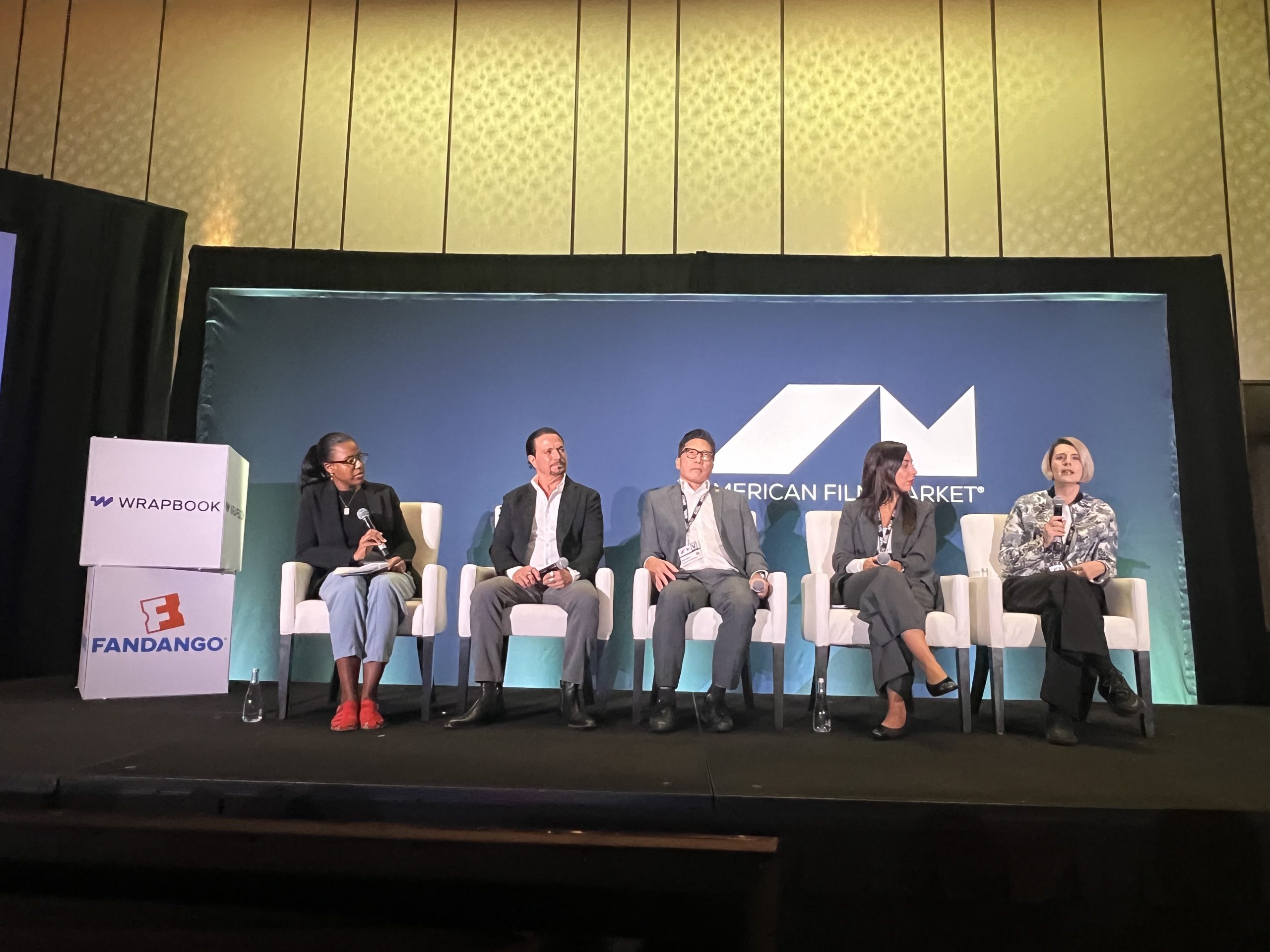
Our CEO and Founder, Richard “RB” Botto, joined Claire Brooks, Executive Director of the Association of Film Commissioners International (AFCI), along with international production leaders for the panel Where to Shoot Next: The Evolving Global Production Landscape.
The discussion explored how regions around the world are competing to attract film and television production, and why choosing where to shoot involves much more than finding the highest tax incentive.
Of course, incentives matter. But so do infrastructure, experienced local crews, production services, and the ability of a region to support your project from start to finish.
This is something we see firsthand through our global partnership with AFCI, which was announced earlier this year at Cannes and featured in The Hollywood Reporter.
One of the biggest challenges facing emerging production markets isn’t necessarily a lack of incentives or locations. It’s a lack of trained crew who can support incoming productions.
And that’s exactly what we’re working to address through Stage 32 Certification.
How Stage 32 Certification Is Helping Build the Global Production Workforce
Stage 32 is working with film commissions and organizations around the world to help train and certify local production professionals, creating stronger workforces and making regions more competitive for international productions.
Through our fully online certification programs, taught by working industry professionals, we’re helping people develop the skills required to work on professional film and television sets.
For WIFTI members, I think this presents two exciting opportunities.
If you’re a producer, understanding the available workforce and production infrastructure in different regions can help you make smarter decisions about where to shoot.
And if you’re looking to expand your career into production, certification can help you develop practical skills and demonstrate your qualifications to potential employers.
Stage 32 Certification programs include:
- Location Management: Learn location scouting, budgeting, scheduling, contracts, and the logistics of managing filming locations.
- Production Coordinating: Understand the organizational and logistical responsibilities that keep productions moving.
- Assistant Directing: Learn scheduling, on-set protocols, call sheets, and how to help manage a professional production.
- Production Accounting: Build skills in budgeting, payroll, cost reporting, and financial management.
- Line Producing & Production Management: Develop the knowledge needed to manage budgets, schedules, and production operations.
Once certified, professionals receive credentials and become part of a global database searchable by industry professionals, film commissions, and production companies.
Explore Stage 32 Certification Programs
And if you’re producing a project internationally, I highly recommend our free webinar with AFCI’s Marjorie Galas:
Understanding What a Film Commission Is, What They Do, and How They Benefit Productions — FREE
You’ll learn how film commissions can help with locations, permitting, local crews, production logistics, and resources you may not even realize are available to you.
4. Global Production Incentives Are Part of the Financing Conversation
Another major theme at AFM was the growing importance of international production incentives.
From discussions about U.S. production incentives to the opportunities available in emerging international markets, producers are increasingly evaluating where their budgets can go the furthest.
But the highest rebate percentage doesn’t always mean the best deal.
You also need to consider local spending requirements, qualified expenditures, payment timelines, crew availability, and whether the region can realistically support your production.
Recommended Stage 32 Education:
The International Money Your Production Is Already Qualified For — And How to Claim It
Taught by Viviana Zarragoitia of Three Point Capital, who has been involved in financing more than 100 independent films, this webinar walks you through how global tax incentives work and how to incorporate them into your financing strategy.
Bringing These Lessons Back to Your Own Projects
One of the things I love most about AFM is that it reminds me how much opportunity exists when you understand the business behind the creative process.
And that’s what we work so hard to bring to the Stage 32 community every month.
You don’t have to attend every major film market or live in Los Angeles to learn directly from the people financing, producing, and distributing content. Through Stage 32, you can access education from working professionals who are actively making these decisions.
For our WIFTI community, I hope you’ll take advantage of these resources, whether you’re developing your first feature, preparing to finance your next project, exploring international production, or looking to build new skills and advance your career.
Your WIFTI Member Benefit
As a reminder, through our global partnership, WIFTI members receive 20% off Stage 32 webinars, classes, and labs.
My biggest takeaway from AFM this year is that the opportunities are there, but being prepared matters more than ever.
Understand your financing. Know your audience. Build the right relationships. And never stop educating yourself about how this industry is evolving.
I hope these resources help you take that next step toward getting your projects made!
Cheers!
Amanda Toney
Managing Director, Stage 32
Oct 19, 2026 | News
By Amanda Toney, Managing Director, Stage 32
Hello WIFTI Members!
One of the conversations I seem to be having constantly with filmmakers and producers these days is about financing.
And the reality is, the way independent films are financed today looks very different from even five or ten years ago.
Streaming has disrupted traditional distribution models. International buyers have become more selective. Presales are harder to secure, and investors are asking tougher questions about how and when they’ll see a return.
Today, financing an independent film often means piecing together multiple sources of capital, understanding tax incentives, finding the right equity partners, and building a realistic distribution strategy long before cameras roll.
And here’s something I think every filmmaker needs to understand: A $250,000 film and a $5 million film shouldn’t have the same financing strategy.
Understanding Your Finance Stack
Your finance stack is simply the combination of funding sources that come together to cover your film’s budget. That might include private equity, tax incentives, grants, international presales, distribution advances, or debt financing.
But not every financing source makes sense for every budget.
A microbudget feature might rely primarily on private investors and creative partnerships. A $1 million film may start incorporating tax incentives and sales estimates. At $3 million to $7 million, financing can become significantly more complex, with multiple investors, international partners, and more sophisticated financial structures.
Your financing strategy needs to fit your film, not the other way around.
New Stage 32 Film Financing Webinars: Find Your Budget
At Stage 32, we’re constantly bringing in working producers, financiers, and industry executives to share what’s actually happening in today’s marketplace.
This month, we’ve put together something I’m particularly excited about: four new film financing webinars, each focused on a specific budget range.
Whether you’re financing your first microbudget feature or packaging a multimillion-dollar production, you can learn directly from professionals who understand what it takes to get films financed today.
Taught by Michelle Alexandria, Producer, Film Distributor, and PGA Member
At this budget level, every dollar matters. Michelle will walk you through how to structure your financing, approach private investors, build a realistic budget, and make smart production decisions that protect your film from development through distribution.
Taught by Michelle Alexandria
This is where financing can start to become more layered. Learn how to combine financing sources, evaluate tax incentives, package your film with marketable talent, and understand how distribution potential should influence your budget.
Taught by Jeanette B. Milio, Producer and Film Financier
At this level, understanding how to structure your finance stack becomes even more important. Jeanette will explore how to evaluate funding sources, approach financing partners, and develop a commercially viable package that attracts serious investors.
Taught by Jeanette B. Milio
As your budget grows, so do the financial expectations. Learn how to structure a more sophisticated financing plan, evaluate capital sources, and position your project for investors and the international marketplace.
Why This Matters for WIFTI Members
One of the things I love about the WIFTI community is how many of you are actively creating your own opportunities. You’re writing, directing, producing, developing projects, building companies, and finding ways to bring stories to audiences around the world.
And I believe understanding the business side of filmmaking is one of the most empowering things you can do for your career.
You don’t need to become a finance expert overnight. But knowing how to build a realistic budget, understand your financing options, evaluate potential partners, and speak confidently with investors gives you much more control over your projects.
It also means you’re better equipped to recognize when a financing structure doesn’t make sense or when a deal might not be in your best interest.
Your WIFTI Member Benefit
As a reminder, through our global partnership, WIFTI members receive 20% off Stage 32 webinars, classes, and labs.
If you’re currently developing or packaging a feature, I’d encourage you to start with the webinar that most closely matches your intended budget.
Because at the end of the day, getting a film made isn’t just about raising money. It’s about raising the right money, putting together a smart plan, and protecting the project you’ve worked so hard to create.
I hope you’ll take advantage of these opportunities, and I look forward to hearing about the films you’re bringing to life!
Cheers!
Amanda Toney
Managing Director, Stage 32
Sep 21, 2026 | News
By Amanda Toney, Managing Director, Stage 32
Hello WIFTI Members!
Everywhere I go in the industry right now, AI comes up.
And depending on who you’re talking to, there’s excitement, curiosity, skepticism, fear – or some combination of all four.
I understand why.
We’re working in an industry built on human creativity. Our stories come from our experiences, our voices and our perspectives. As filmmakers, writers, producers, directors and actors, we should be asking hard questions about what AI means for creative ownership, copyright, jobs and the future of our business.
But I also believe one of the most important things we can do right now is educate ourselves about what’s changing.
You don’t have to love AI. You don’t have to use every new tool that comes along. But you should understand what’s happening, what your rights are, what the risks are and where this technology is already intersecting with the way film and television are developed, produced and distributed.
That’s been our approach at Stage 32.
Learn It. Understand It. Then Decide How You Want to Use It.
We’ve been very intentional about the AI education we’re building at Stage 32.
This isn’t about telling you that AI should replace any part of the human creative process. It’s about giving you access to working filmmakers, AI experts and entertainment attorneys who can help you understand an area of our business that is evolving incredibly quickly.
And because the questions a screenwriter has about AI are very different from the questions a producer, director or actor has, we’ve built education around the specific issues affecting each part of our industry.
So, depending on where you are in your career, here’s where I’d start:
IF YOU’RE NEW TO AI AND JUST WANT TO UNDERSTAND IT
Understanding the Differences Between ChatGPT, Claude, Midjourney, Google Gemini, Character AI & Sora
Taught by screenwriter, director and AI expert Joshua Young.
If all the different platforms and terminology feel overwhelming, start here. This breaks down what the major AI tools actually are, what they’re designed to do, where their limitations are, and the copyright, privacy and ethical issues you should understand before using them.
Explore the webinar →
IF YOU’RE A SCREENWRITER
The Screenwriter’s Guide to AI: WGA Protections, Protecting Your Work, Copyright & Contracts
This is about something I think every writer should understand right now: your rights. Learn how AI intersects with WGA protections, copyright, contracts and ownership so you can protect your work as the technology and the rules around it continue to evolve.
Explore the webinar →
2-Part Class: How to Use ChatGPT to Help with Your Script Development
Taught by Joshua Young.
For writers who do want to explore the technology, this class focuses on using ChatGPT as an assistant during development—from research and brainstorming to examining characters, story structure and your concept—while keeping your own voice and creative choices at the center.
Explore the class →
IF YOU’RE A DIRECTOR OR FILMMAKER
The Director’s Guide to AI: DGA Protections, Copyright & Production
Taught by entertainment attorney Anthony Glukhov.
This is an important one. Anthony covers DGA protections, copyright ownership, digital replicas and performer consent, AI language in production agreements, insurance, distribution and practical ways to protect your creative authority as a director.
Explore the webinar →
Introduction to AI for Imagery: Mock-Ups, Trailers, Sizzle Reels, Previs & More!
Taught by Joshua Young.
If you want to understand the visual side of the technology, Joshua gives you an introduction to the tools and what they’re capable of, along with their practical applications for filmmakers.
Explore the webinar →
IF YOU’RE A PRODUCER
The Producer’s Guide to AI: Distribution, Delivery & Chain of Title
Taught by entertainment attorney Anthony Glukhov.
Producers need to be thinking about AI well beyond the creative process. How can its use affect your chain of title? What are distributors, insurers and sales agents asking? What needs to be documented? And how should AI rights be addressed in your agreements? This webinar approaches AI from the business and legal side of actually getting a film made, delivered and distributed.
Explore the webinar →
IF YOU’RE AN ACTOR OR WORK WITH PERFORMERS
The Actor’s Guide to AI: SAG-AFTRA Protections, Consent & Digital Replicas
Taught by entertainment labor attorney and former Netflix Director of Labor Relations Michael Maizner.
If you’re an actor—or a producer hiring actors—you need to understand the rules around digital replicas, synthetic performers, voice cloning, consent and compensation. Michael breaks down the current SAG-AFTRA protections and what both performers and producers need to know.
Explore the webinar →
IF YOU WORK IN POST-PRODUCTION
How to Use AI to Streamline Your Post-Production
Taught by Joshua Young.
This webinar looks specifically at what’s happening with AI in post-production and how these tools are affecting workflows for filmmakers and editors.
Explore the webinar →
Why I Think This Matters for WIFTI Members
One of the things I value most about our partnership with WIFTI is that we’re talking to women working across virtually every area of entertainment and all over the world.
And this conversation affects all of us.
AI isn’t just a screenwriting issue. It’s becoming a labor issue, a producing issue, a copyright issue, a financing and distribution issue, a performer-rights issue and, yes, a creative issue. The rules are evolving alongside the technology.
That’s why I don’t think ignoring it is the answer.
Understanding it gives you agency.
It allows you to ask better questions when you’re negotiating a contract. It helps you recognize when your intellectual property or likeness may be at risk. It helps producers understand what could create problems with chain of title or distribution. And it allows you to decide for yourself where you draw the line with AI in your own work.
Don’t Forget Your WIFTI Member Benefit
Through our global partnership, WIFTI members receive 20% off Stage 32 webinars, classes and labs.
So if you’ve been wondering where to begin, don’t feel like you need to learn everything at once. Find your role above and start with the education that’s most relevant to the work you’re doing right now.
My biggest advice is simply: don’t sit this conversation out.
Learn what’s changing. Understand your rights. Protect your work. And then decide for yourself how—or whether—you want these tools to be part of your creative process.
That’s ultimately what education should give you: the ability to make informed choices about your own career.
Cheers!
Amanda Toney
Managing Director, Stage 32
Jul 27, 2026 | News, Event
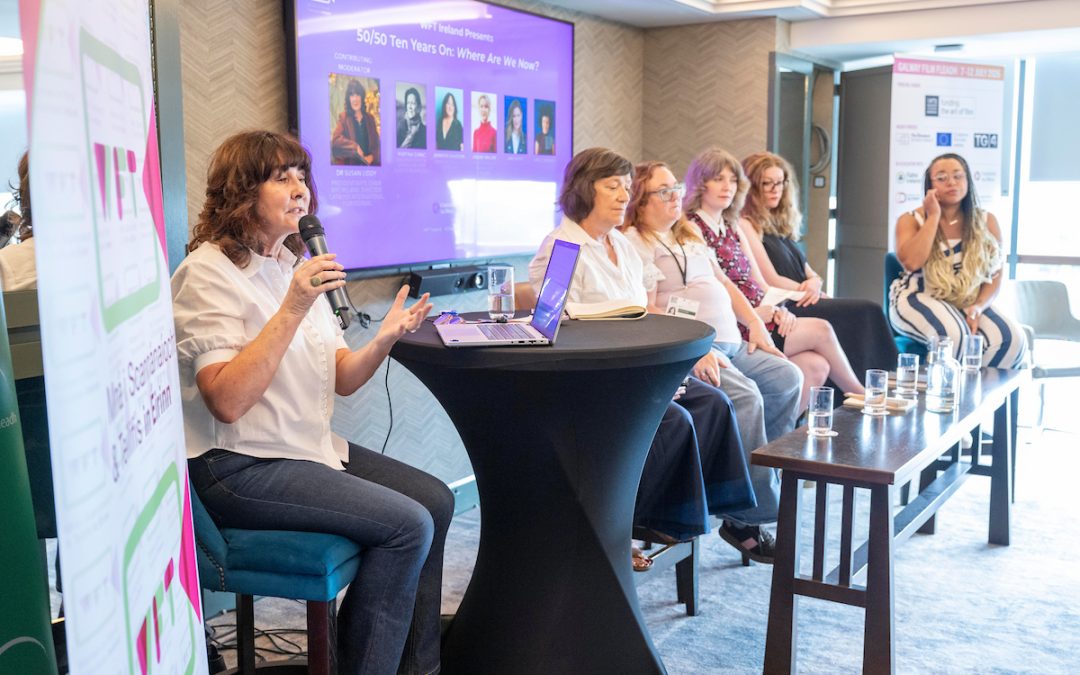
From left to right: Dr Susan Liddy (President WIFTI, Chair WFT Ireland, Director Catalyst International Film Festival), Martina Durac (Executive Director, Screen Directors Guild of Ireland), Jennifer Davidson (Chair, Writers Guild of Ireland), Aisling Malone (Project Manager, Raising Films Ireland), Lara Hickey (Co-creative Director, X-Pollinator), Grace Odumosu (Producer, Raising Films Ireland, GORM Media, Catalyst International Film Festival)
“We tend to believe that with the passage of time comes change and that we just need patience. We tell ourselves it cannot change overnight. But I think we need to wake up to the fact that that can be a bit of a salve sometimes. Even if you’ve been patient and asked nicely, sometimes change doesn’t necessarily happen at all. So being vigilant and devising different strategies is extremely important.”
– Dr Susan Liddy at the Galway Film Fleadh 2026
Upon the launch of the 50/50 by 2020 project by the Swedish Film Institute in Cannes in 2016, there was a buzz around the initiative, a sense that this was a tangible goal across many countries.
And while undoubtedly strides have been made across the global screen industries, in the intervening years there has perhaps been a complacency as well, hence the need for these conversations well beyond 2020. The status of gender equity across global screen industries was a major focus at the 2026 WIFTI Global Summit in Adare this past February. To further the conversation around the progress, challenges, and future of this initiative, Dr Susan Liddy (President WIFTI, Chair WFT Ireland, Director Catalyst International Film Festival) was joined by a panel of female industry leaders for a WFT Ireland Presents Event at the Galway Film Fleadh on Friday July 10, 2026.
Panellists included:
- Martina Durac, Executive Director, Screen Directors Guild of Ireland (SDGI)
- Jennifer Davidson, Chair, Writers Guild of Ireland (WGI)
- Aisling Malone, Project Manager, Raising Films Ireland (RFI)
- Lara Hickey, Co-creative Director, X-Pollinator
- Grace Odumosu, Producer, Raising Films Ireland, GORM Media, Catalyst International Film Festival
Dr Susan Liddy reminded the audience that a decade ago in the Irish screen industries ‘Irish stories’ largely meant male stories. With the launch of 50/50 by 2020 came policy statements and support, with people coming on board across the industry to champion paths of entry for women and minorities. But 10 years on, what is clear is that there is much to be done to ensure that these entry points lead to sustainable careers. Indeed, according to WGI Chair Jennifer Davidson “When we look at the positive, when we look at the change that has happened, it’s in schemes, it’s in low budget projects, it’s in mentorship and development, which is all really important and really vital. But that does not create sustainable careers.” Executive Director of SDGI Martina Durac spoke of women’s fatigue working for equality that has not yet emerged.
What’s clear is that goodwill and opening doors is not enough if the industry is to build career paths for women and minorities. If there is no clear path beyond trainee programmes and shorts productions, how is the landscape of feature films and television series going to change? What is needed is cross-collaboration across all levels of production and distribution and a commitment to ensuring that women are not only included, but given the opportunity to be visible, to take up space.
Much of the conversation has remained the same across the past decade. Until there is a systemic, organisational reckoning, one that is not solely led by marginalised people but also by industry allies, we very well may be having the same conversations a decade from now, Dr Susan Liddy suggested. The panel agreed, women and minority filmmakers need funding and the opportunity to create without having to be hailed as ‘exceptional’.
We are grateful to the team at the Galway Film Fleadh for their help in organising such a meaningful event, demonstrating the importance of keeping the momentum around these conversations going. A big thank you to Screen Ireland and Coimisiún na Meán for their support of this event, as well as to the wonderful folks at The Production People for partnering with us and sponsoring the reception which allowed for the conversations to continue following the panel event.
Reigniting these conversations around 50/50 by 2020 is a major focus of Dr Liddy’s Second Term as WIFTI President. In the coming months our goal is to share statistics and case studies with the WIFTI community so that we can see where and how screen industries are succeeding in reaching gender equity, and where improvements can be made.
For further insights on this important panel, read this Screen Daily article.
Jul 23, 2026 | News, Event
One of the things I’m proudest of at Stage 32 is that we’ve built something that didn’t really exist before, a place where, no matter where you live, you can learn directly from the people actually working in this industry right now.
We now have over 1.5 million members across 190 countries, and what continues to set Stage 32 apart is the access. Every month, we bring in showrunners, producers, executives, and creatives behind some of the biggest projects in film and television, not to speak in theory, but to share how things are really getting made, sold, and distributed today.
This month, I get to invite you into one of my favorite rooms in our entire community for a truly special conversation.
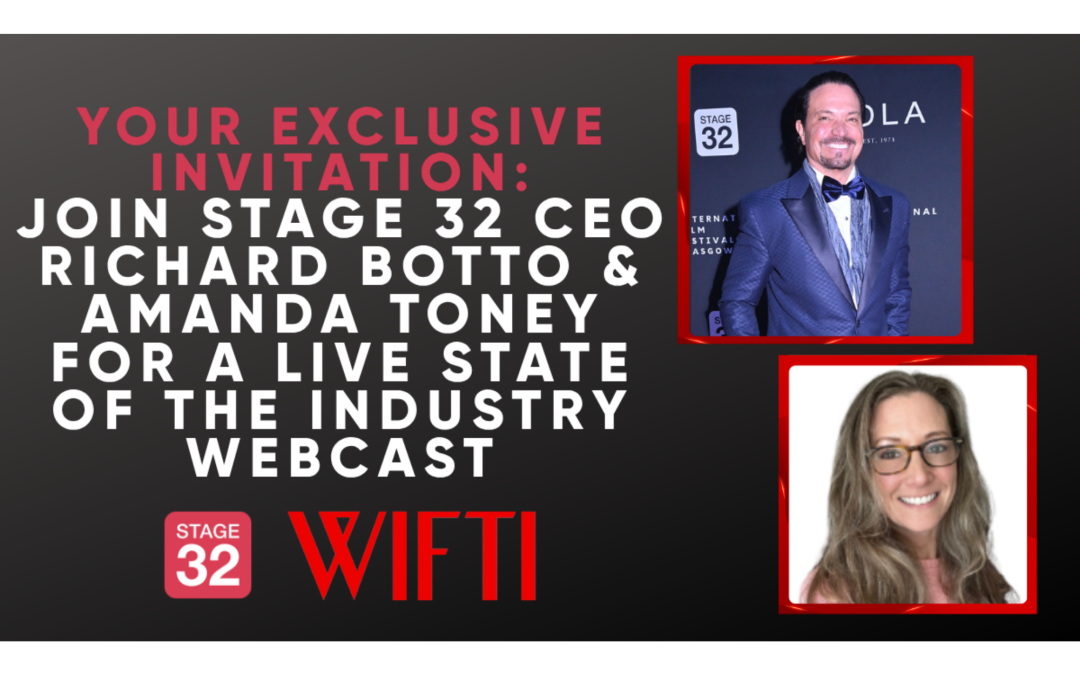
I’m moderating a live State of the Industry Ask Me Anything with our founder and CEO, Richard “RB” Botto, and I want you there with me.
Why This Conversation, and Why Now
RB spends his year in a way very few people in this industry do. He is constantly on the go, in the meetings, and on the phone with the executives, producers, financiers, and buyers who are shaping where this business is heading. He sits down with the decision-makers, and then he comes back and tells our community the truth about what he’s seeing and hearing.
That’s exactly what this Ask Me Anything event is. RB is going to open up about the real state of the industry right now: what’s selling and what isn’t, who’s buying, what executives are genuinely looking for from creatives today, and where the real opportunities are hiding for those who know where to look. This is a moment of enormous change in our business, and with change comes opportunity, but only for the people who understand what’s actually happening.
And because I’ll be moderating, I’ll be steering the conversation toward the questions I know matter most to you, and making sure we get to the practical, take-it-back-to-your-own-work answers this community always values.
Most importantly, this is interactive. This is an Ask Me Anything, which means you get to ask RB the questions you’ve been carrying around, about your craft, your career, the marketplace, or whatever challenge you’re facing right now, and get honest answers in real time.
Here’s the Special Part: This One Lives Inside the Stage 32 Writers’ Room
This AMA is happening inside the Stage 32 Writers’ Room, our dedicated year-round home for creators, and that’s where this gets exciting for the WIFTI community.
I want you in that room, so I’d like to give you a gift: a free month of the Writers’ Room, on us.
Click here to claim your free month of the Writers’ Room.
That free month gets you into this AMA event with RB, and it also opens the door to everything else the Writers’ Room offers over the next few weeks. I genuinely want you to come for the AMA and then stay to explore the rest, because there is so much here built to move your career forward:
Open Writing Assignments and weekly live Zooms with working writers, producers, reps, filmmakers, and executives. A complete library of all past webcasts with industry pros, available on demand in the Writers’ Room to watch or listen to at your convenience. Ongoing script workshops and live pitch practice with a community of dedicated creatives. And a group of mentors and peers from around the world who show up for one another every single week, all year long.
Think of the AMA as your reason to walk through the door, and the free month as your chance to see everything on the other side of it.
How to Join Me
Claim your free month of the Writers’ Room using the link below, and you’ll have access to the live AMA along with everything else inside.
Ask Me Anything: The State of the Industry with Stage 32 CEO Richard “RB” Botto, moderated by me, Amanda Toney
Wednesday, July 29th at 4:00 pm PT
Live inside the Stage 32 Writers’ Room
Start your free month of the Writers’ Room here and join us.
And if you can’t make it live, don’t worry. As a Writers’ Room member, you’ll have access to the full on-demand recording afterward, so you can watch or listen whenever it works for you.
At the end of the day, this is what we’re focused on at Stage 32, giving you access to real conversations, with real people, about how this industry actually works. And I truly believe that when you can get in the room, even virtually, with the people doing this work at a high level, it changes how you approach your own career.
This is one of those rooms. I’d love for you to be in it with me.
Come join us, claim your free month here.
I hope you’ll be there.
Amanda Toney
Managing Director, Stage 32
